Ant Rogers, Biodiversity Implementation Officer for Pembrokeshire Nature Partnership
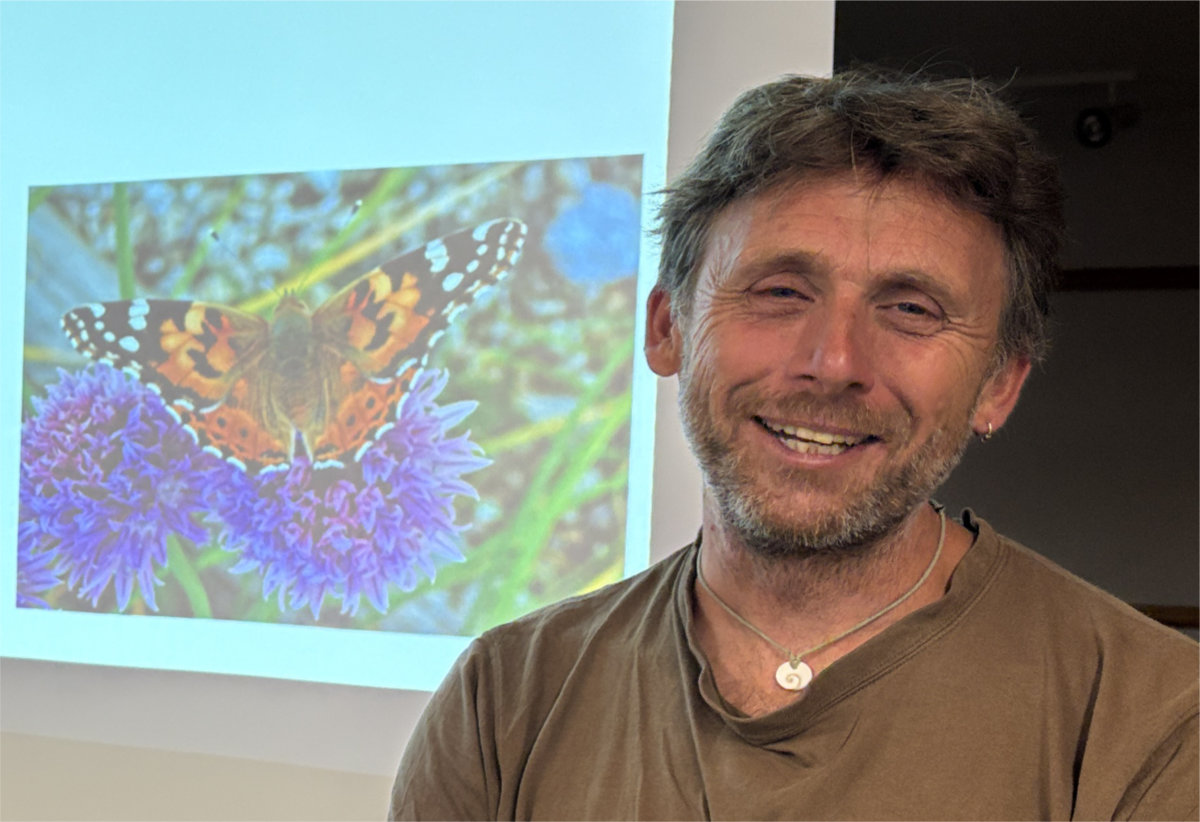
Ant Rogers has worked in environmental protection and nature recovery in various roles since 1996. For the last 13 years he has been the Biodiversity Implementation Officer for the Pembrokeshire Nature Partnership – promoting collaboration to deliver nature recovery actions across the County and beyond. Ant’s briefing covered the state and role of nature in the global, national and local context; why that mattes to our society; and what we can do to promote nature recovery. Ant’s role helps bring together and co-ordinates different organisations. This includes the National Trust with whom he has conducted lichen surveys.
Ant explained why nature matters and why healthy functioning ecosystems sustain life on earth and provide services that underpin society. It should be accepted that our economies are embedded within nature, not external to it. The ‘World Economic Forum Global Risks Report’ shows five categories: economic, environmental, geopolitical, societal and technological. In terms of Global Risks regarding their likelihood and impact, many are environmental. For instance, climate action failure, extreme weather and biodiversity loss.
From the data a further two lists, short term (2 years) and longer (10 years), are compiled which indicate the top ten impacts of risks. Biodiversity is not seen as a pressing concern in the short term, but is in the longer term. Estimates are that over half of the world’s economic output rely on nature. Collapse of natural ecosystems may have severe consequences. The result could be seen as reduction of crop yields and pollination. Also, the supply and quality of water could be affected!
Some key facts were given from the ‘2023 State of Nature Report (Wales)’: Since 1994 Welsh wildlife has decreased on average by 20%. Moths indicate strongest decline and one in six Welsh species are threatened with extinction. Plant species are found in fewer places than before. The reasons for decline are due to the way land is managed for industry, agriculture and for the changes in freshwater. Climate change and invasive species also have an impact.
A ‘Nature recovery action plan’ exists in Pembrokeshire, the purpose of which is to educate and raise public awareness through events and newsletters. It also works with public bodies, the private sector, special interest groups, communities and landowners. The following two examples were given: Example 1. Households in Spittal were given a packet of native wildflower seeds to plant and encourage feeding of invertebrates and birds. Example 2. Partnership of local council, fire service, health authority working together to install nesting boxes on side of a hospital owned building.
Safeguarding species and management of habitats is a priority. Where space is available, wildflower beds are created to encourage pollinating and wildlife.
Ant stressed that we should all be involved and signposted us to some initiatives such as B- Lines and Bee Friendly. B-Lines is a series of ‘insect pathways’ running
through our countryside and towns, along which we are restoring and creating a series of wildflower-rich areas.
‘Bee friendly’ aims to provide pollinators with food sources, places to live and the avoidance of harmful pesticides and herbicides.
For more information please use the following textual links. Report by Graham Wright
b-lines Wales-Action-Plan-for-Pollinators
https://stateofnature.org.uk/countries/wales/
https://www.pembrokeshire.gov.uk/biodiversity/pembrokeshire-nature- partnership-plans-and-guidance
 Pembrokeshire National Trust Association