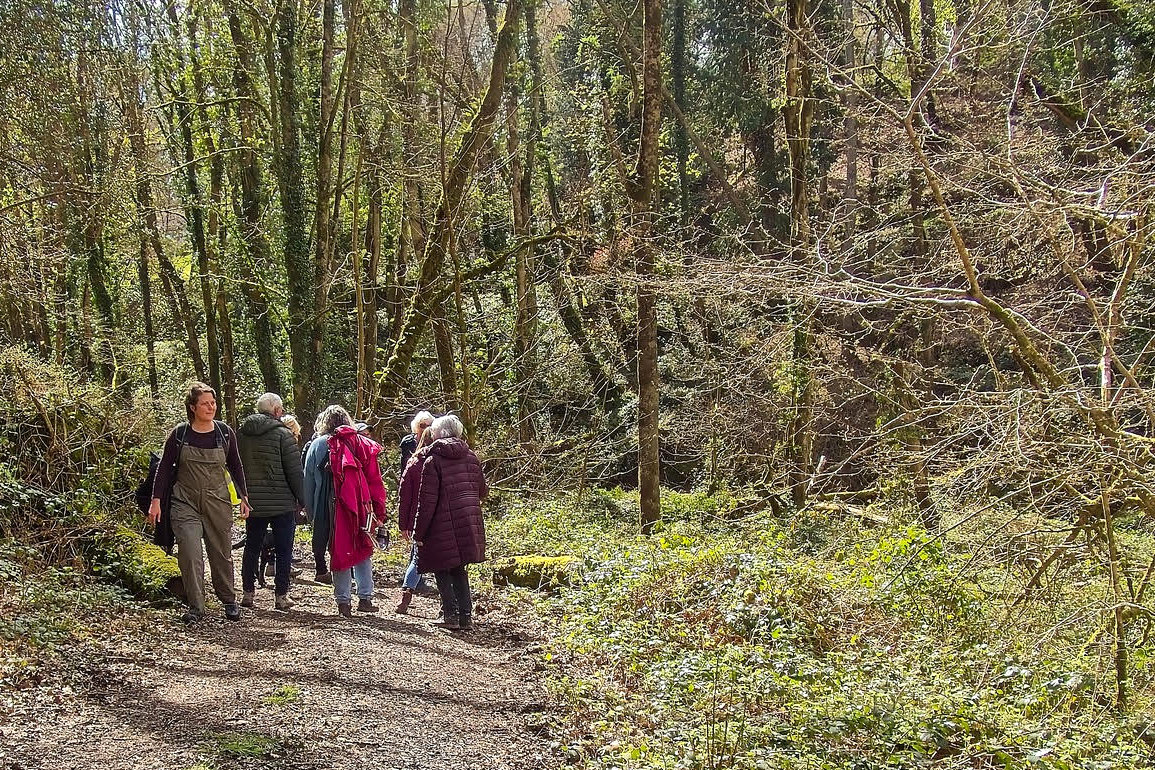
Natasha Doane, TWIG Project Officer, took us on a fascinating guided walk on 13th April 2026, through part of the Colby Woodlands (situated to the N of the Woodland Garden) to explain what the TWIG Project is achieving.
The project is funded by The Woodland Investment Grant (TWIG) scheme. It is being delivered by The National Lottery Heritage Fund in partnership with the Welsh Government.
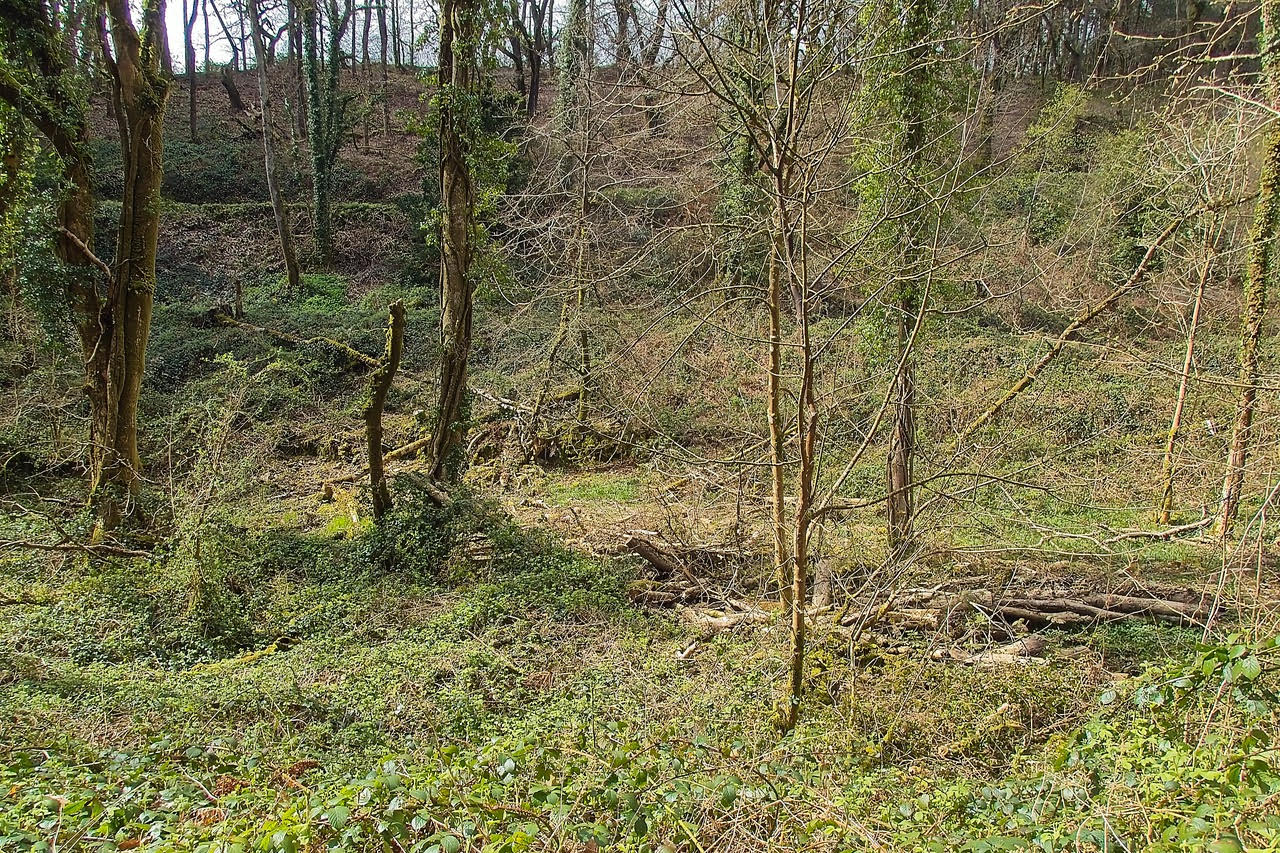
The history of these wild wooded valleys is rooted in the industrial past of coal mining and the functional use of timber through time. In the past, native species were replaced with fast growing trees such as conifers, so that a lot of our native woodland species struggled to survive. The project aims to restore ecological balance within the woodlands (79 ha) by limited intervention, restoring the woodland habitats to optimum health, thus the thousands of plants, bryophytes, fungi, insects, birds and mammals dependent on these woodland habitats will become part of an increasingly functional ecological network.
This is a fantastic opportunity to restore an area that will flourish from minimal intervention. Nature knows what to do, it just needs a little help to be able find balance again. Key elements of the project include:
- Improving access into the woodlands by repairing pathways, steps and managing path vegetation for all to enjoy.
- Contributing towards the needs of local people as a public space.
- Restoring 69 hectares of “Priority Habitat” (Ancient Woodland and Wood Pasture) through eradication of Invasive Non-Native Species (INNS), natural flood plain management, woodland restructuring, and the introduction of cattle grazing on heathland areas.
- Planting 1000 native broadleaf trees and over 150 fruit trees.
- Providing a new visitor map to aid navigation as well as downloadable trails for the website.
The streams are being managed by inserting “leaky dams” which slow the flow of water at times of peak flow. Thus, the woodland will retain more water, soil and nutrients whilst filtering the water that flows downstream, providing healthier habitats along the way.
The project also involves adjoining farmland, meadows and water systems and there has been a high level of cooperation with local farmers, landowners and local communities.
The group were fascinated by the excellent explanations given by Natasha as we visited parts of the site to see examples of the works being undertaken.
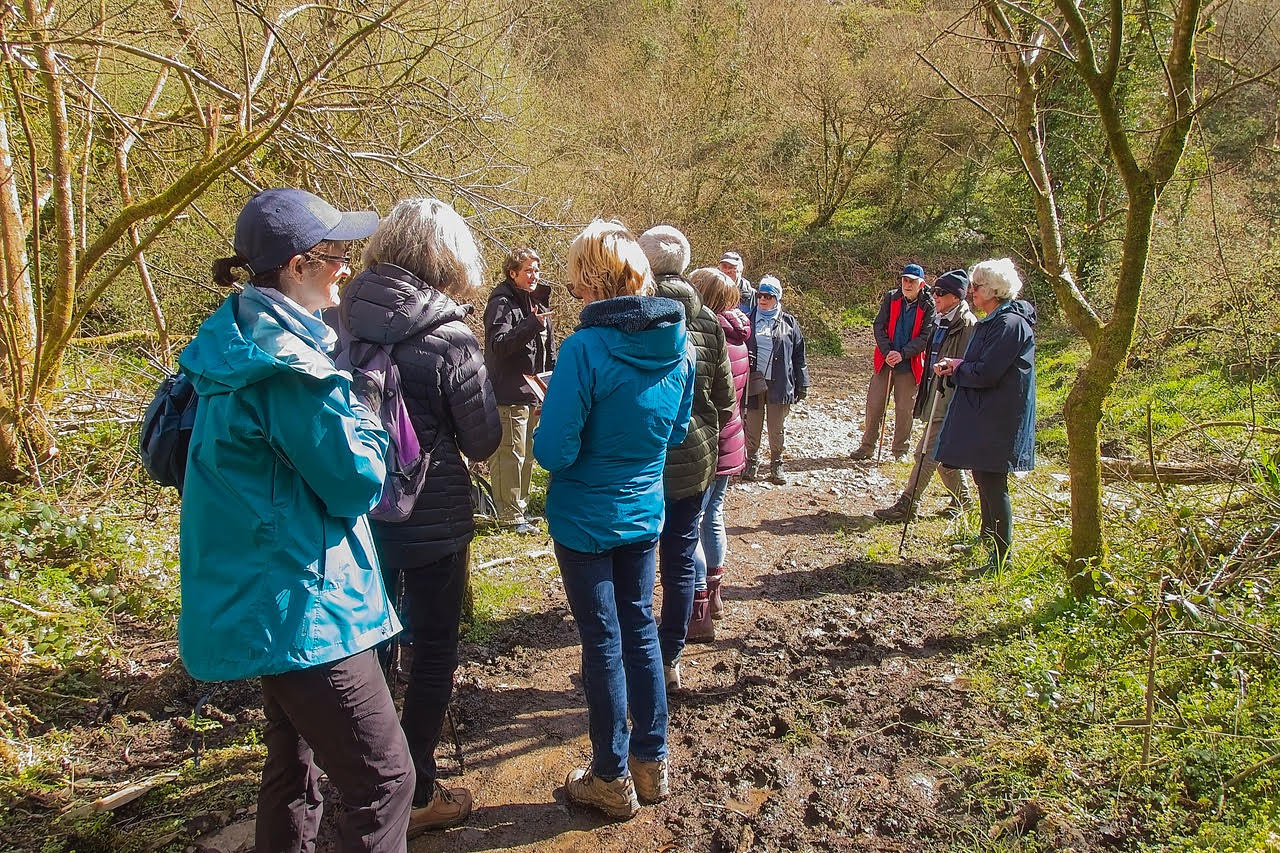
The two-year project will finish in June 2026, but the long-term management will continue in line with the management plan, and a ranger has been appointed to take the work forward. The walk concluded at the tea-rooms and Natasha was warmly thanked for her detailed presentation.
Report by Steve Drinkwater
Photographs: Miles Huthwaite

