PNTA Walk at FWW/Gupton 28th September 2026
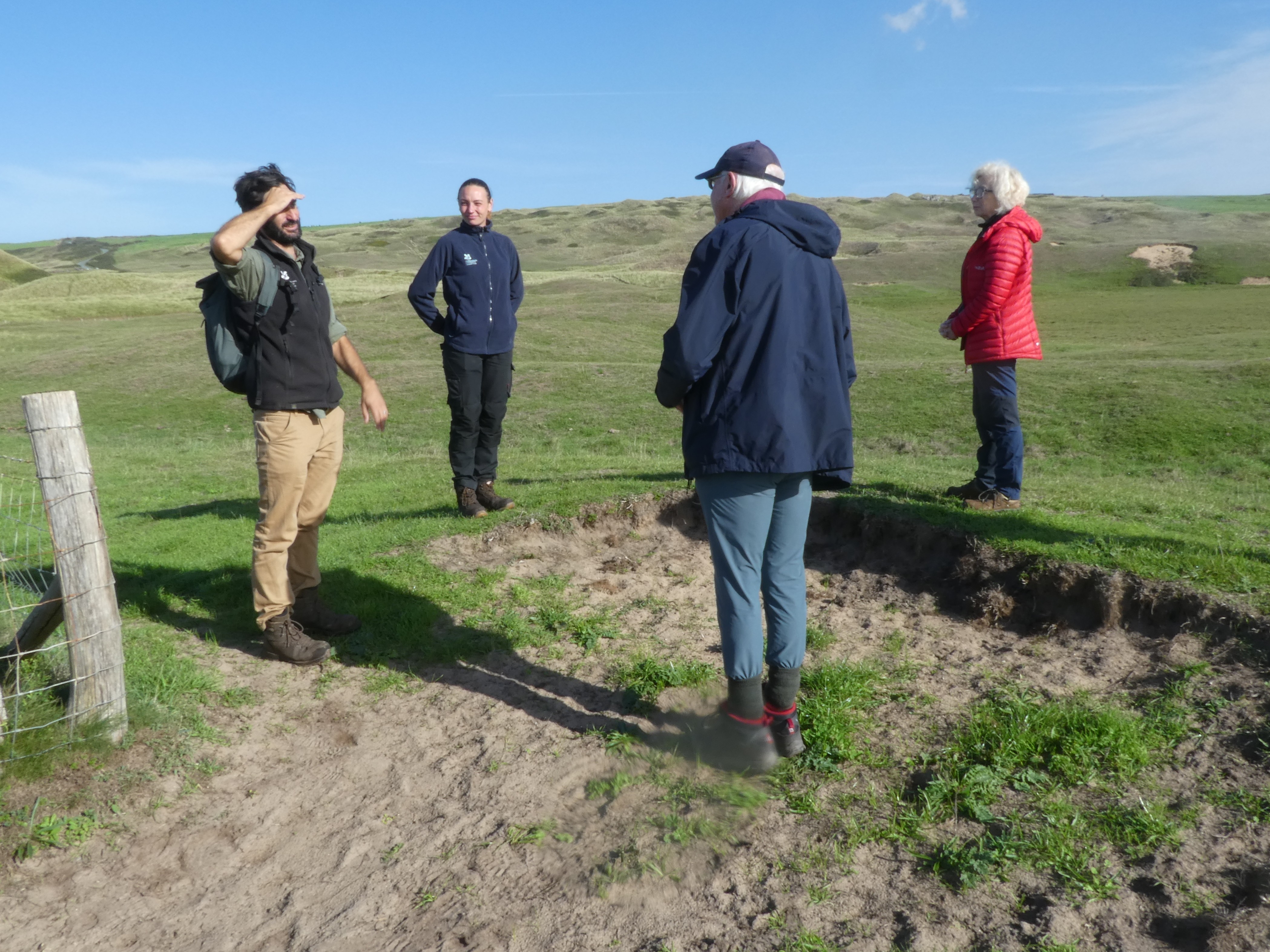
A small band of PNTA members met NT Lead Ranger Alex Shilling at Freshwater West on 28thSeptember 2026 for a guided walk around Gupton Farm to look at land management and conservation issues on NT land and adjacent landholdings. Alex explained that the huge variety of flora present largely reflects the various farming practices that have created the mosaic of differing habitats over at least the last 150 years.
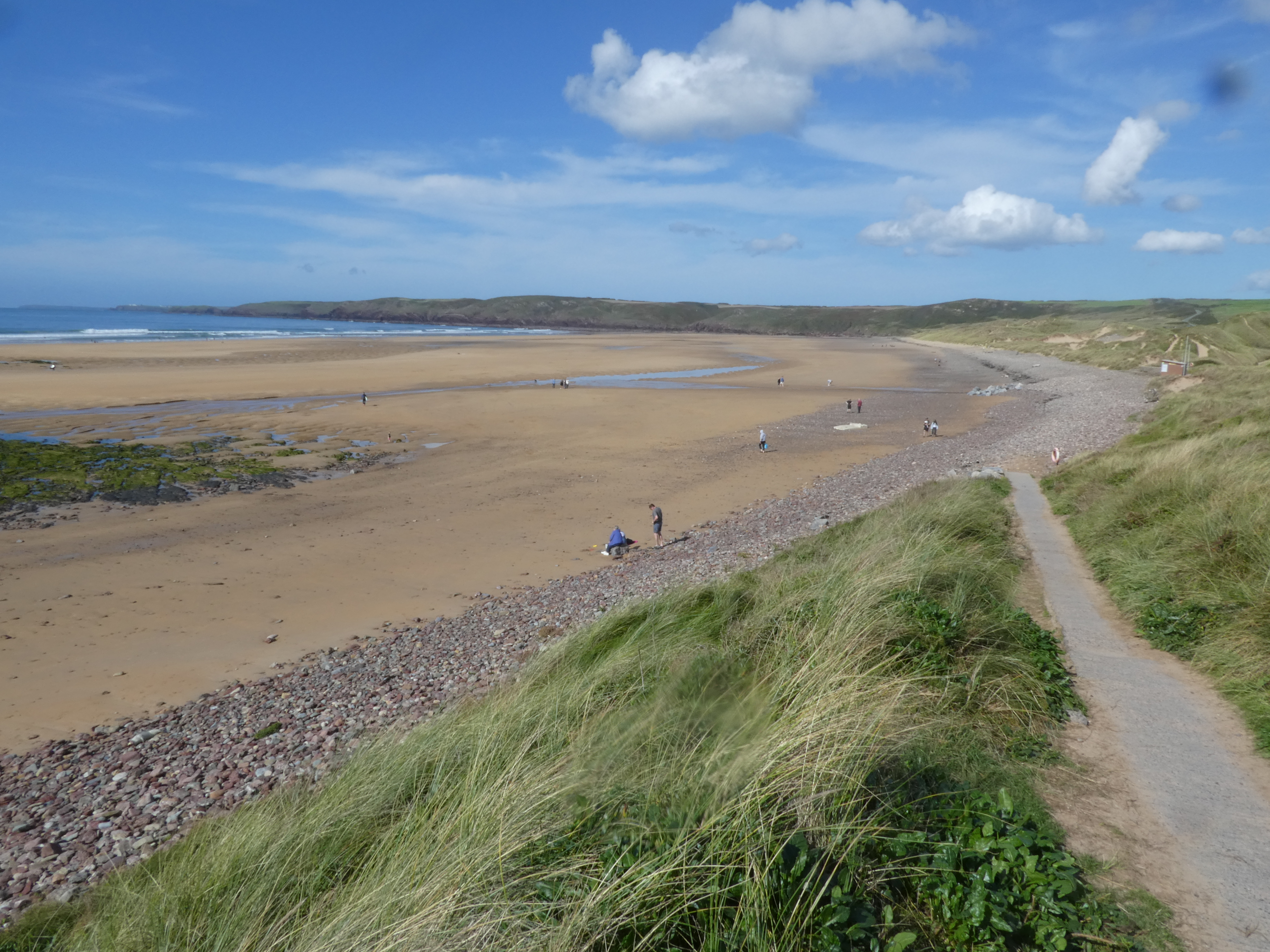
Nowadays much of the land at the site carries a whole host of conservation designations, including SSSI, SAC and SPA, and is located within the Pembrokeshire Coast National Park. Habitats found at FWW/Gupton now include dune, dune grassland, corse (a form of coarse wet pasture), pasture, fen meadow and reedbeds – adjacent to more conventional farming by the NT tenants on the upper part of the Gupton site.
The land was once part of the Cawdor estate, based at Stackpole Court. Major drainage works were undertaken in 1800, for agricultural improvement purposes, which affects the habitats present even to the present day. In the 1950s, the improved farmland was being regularly ploughed in order to facilitate peak production. There was also commercial sand quarrying on the adjacent dunes until 1982.
In 1976 the lands passed into the ownership of NT, allowing more conservation-orientated land management processes to slowly begin.
In 1996 the Environment Agency (as it then was) ceased to maintain the drainage ditches next to the reedbeds and the fen meadows, thus allowing newer habitats to be introduced.
There are many interesting species present at the site, including marsh harriers (in the reed beds) and solitary bees (such as the shrill carder bee) (in the former sand quarry), blunt flowered rush, purple loosestrife and marsh horsetail (in the fen meadow).
The fen meadow is an especially rare and fragile habitat, lying between the reedbeds and rivers downslope and the agricultural land upslope. A delicate balance has to be maintained between the two differing regimes. In the longer term, fen meadow may not survive, because of the tensions between the two. NT is continuing to work with the tenant farmer to improve nature restoration on their land with grazing animals and sympathetic arable crop systems.
Report and Photographs by Steve Drinkwater

